The Bernese
Mountain Dog
A gentle giant from the Swiss Alps: a big, beautiful, tricolour farm dog with an enormous heart and an even bigger devotion to its family. Calm, sweet-natured, and heartbreakingly short-lived.
Temperament, honestly
4 traitsLiving with one
4 essentialsKeep them cool
That Alpine coat means real heat sensitivity. Provide shade and cool spaces, and walk in the cool of the day in summer.
Brush that big coat
The long double coat needs brushing several times a week, and daily during the heavy seasonal sheds. Expect a lot of hair.
Know the health risks
Berners are sadly prone to cancer and joint issues, with a short lifespan. Buy only from breeders who health-test.
Protect growing joints
Go easy on exercise while they're growing. Too much hard running on developing joints can cause lifelong problems.
Coat colours
5 common coatsTricolour
The one and only Bernese coat — jet black, rich rust and crisp white.Jet Black
The dominant base colour, glossy and deep across the body.Rust
Rich reddish-brown markings over the eyes, cheeks, legs and chest.White Blaze
The signature white chest, muzzle stripe and paws. A prized ‘Swiss kiss’.Swiss Kiss
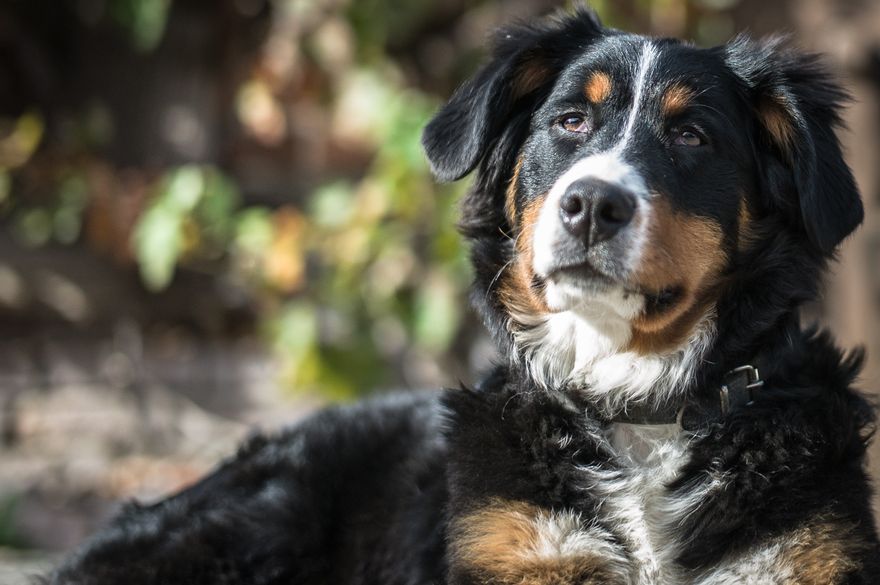
The white swirl on the back of the neck, treasured by Berner lovers.The Bernese comes in exactly one colour scheme — the striking black, rust and white tricolour — and that consistency is part of the breed's iconic beauty. There's no such thing as a "rare colour" Bernese; anyone advertising one is selling a fault or a cross. Whatever the individual markings and the exact placement of that white blaze, a Pawtrait renders them faithfully — Swiss kiss and all.
Did you know
Is a Bernese Mountain Dog right for you?
Six honest questions. No email required, no judgement. Mostly.
Bernese vs the other gentle giants
3 breeds| Bernese Mountain Dog | Golden Retriever | German Shepherd | |
|---|---|---|---|
| Adult weight | 70–115 lbs | 55–75 lbs | 50–90 lbs |
| Energy | Medium | Medium–high | High |
| Shedding | Heavy | Heavy | Heavy |
| Avg lifespan | 7–10 yrs | 10–12 yrs | 9–13 yrs |
| Apartment fit | Poor | Fair | Fair |
What one actually costs
First-year estimates, USDReputable, health-testing breeders only — vital in a cancer-prone breed. Rescues far lower.
Among the pricier breeds to insure, given the cancer and joint risks. Get comprehensive cover early.
A large dog with a large appetite. Quality large-breed food supports those big joints.
Routine care, cooling mats, grooming, and a realistic fund for the breed's known health issues.
Still unnamed?
The Bernese name dealerSee your Bernese Mountain Dog as a Pawtrait
6 styles
Bring it home
Starting at $27Bernese Mountain Dog FAQ
The questions everyone GooglesDo Bernese Mountain Dogs shed a lot?
Yes — heavily. That thick, long double coat sheds year-round and "blows" dramatically twice a year. Expect brushing several times a week (daily during the big sheds), a good vacuum, and fur on everything. It's a genuine, non-negotiable part of Berner ownership.
What is the lifespan of a Bernese Mountain Dog?
Sadly short — typically just 7 to 10 years, one of the shorter lifespans of any breed. Bernese are unusually prone to cancer, which is the leading cause of death, along with joint problems common to giant breeds. It's the hardest truth about this wonderful breed, and something every prospective owner should understand and be at peace with before committing.
Are Bernese Mountain Dogs good with kids?
Wonderfully so — they're among the best family dogs there are. Gentle, patient, calm and affectionate, Berners adore children and are famously tolerant. The only real caution is their sheer size: a happy 100-pound dog can accidentally knock over a toddler, so supervise young children around them as you would any giant breed.
How much does a Bernese Mountain Dog cost?
Roughly $1,500–$4,000 from a reputable, health-testing breeder — and health testing genuinely matters in this cancer-prone breed. Then budget generously for upkeep: as a giant breed with real health risks, expect $2,500–$4,000+ a year for food, insurance, grooming and vet care over their lifetime.
Can Bernese Mountain Dogs be left alone?
Not for long. Berners are deeply people-oriented — often bonding most to one person — and hate being left, which can lead to separation anxiety and unhappiness. They thrive as full members of the household where someone is around for much of the day, not as dogs left alone for long working hours.
Do Bernese Mountain Dogs bark a lot?
Not especially — they're generally quiet, calm dogs that bark to alert you to something rather than for no reason. Their size and deep bark make them natural watchdogs, but they're far too gentle and friendly to be effective guard dogs. Most Berners are peaceful, low-noise housemates.
Keep exploring
Free tools & guidesDog Age Calculator
How old is your Bernese Mountain Dog in human years? The real maths, by breed size.
Free toolBreed Identifier
Upload a photo, discover the breed. Great for the mystery rescues.
City guidesPaw Places
Dog-friendly parks, cafés and hotels in London, Sydney, New York and more.
Breed libraryAll 205 breed guides
From Affenpinscher to Yorkshire Terrier — honest guides to every breed.
Upload a photo, see it instantly
No waiting, no surprises. Your Bernese Mountain Dog's Pawtrait renders in seconds, free to preview, before you spend a cent.
