The German
Shepherd
Engineered by a Prussian cavalry captain to be the perfect herding dog, and promptly hired by every police force, army and film studio on Earth instead.
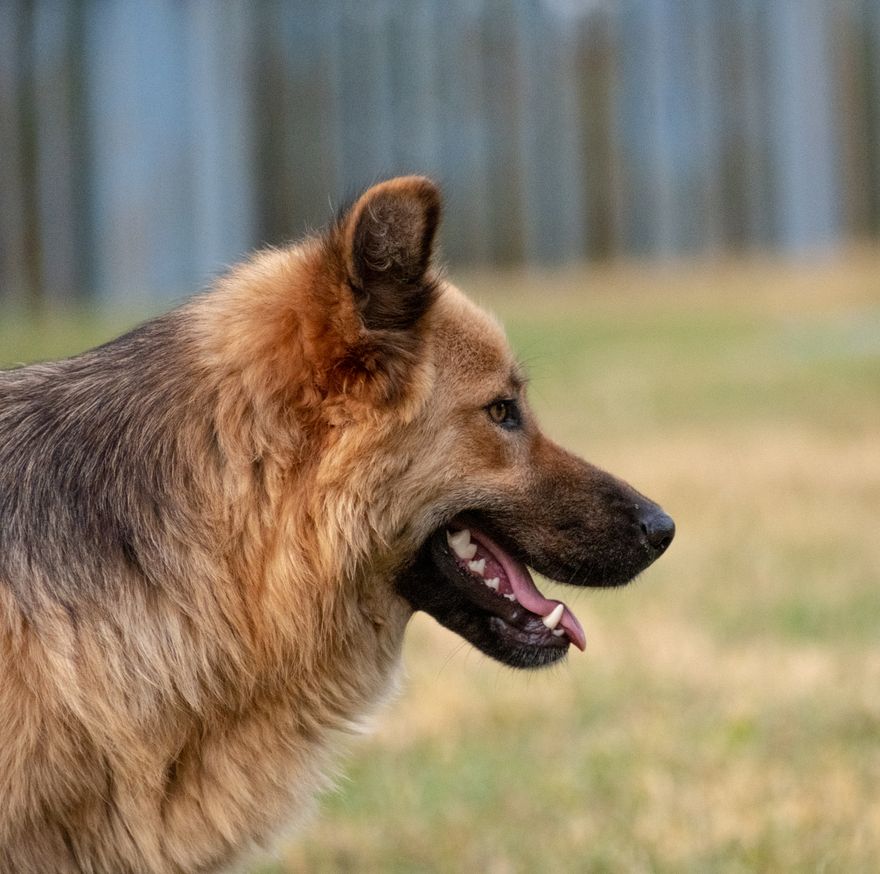
Temperament, honestly
4 traitsLiving with one
4 essentials90+ minutes daily
Split between real exercise and mental work — training drills, scent games, a job. A tired Shepherd is a good Shepherd.
The undercoat lifestyle
They shed year-round and blow coat twice a year, hard. A good rake, a serious vacuum, and acceptance are all required.
Hips & elbows
Dysplasia runs in the breed. Insist on OFA-scored parents, keep them lean, and go easy on joints before 18 months.
Socialise early, properly
Structured exposure to people, dogs and places in puppyhood is what turns natural aloofness into calm confidence.
Coat colours
5 common coatsBlack & Tan
The iconic saddle. What the world pictures on the word "Shepherd."Sable
Banded wolf-grey to gold. The founding dog's own colour.Solid Black
Sleek, striking, and every bit the same dog underneath.Black & Red
The show-line finish: deeper, richer pigment all round.White
Purebred and beautiful, but barred from the AKC show ring.Two honest notes. White Shepherds are 100% German Shepherd — the colour is simply disqualified from AKC conformation, which says nothing about the dog's health or temperament. And "rare" colours like blue or liver command breeder premiums without conferring a single advantage. Whatever the coat — including the glorious long-haired variant — a Pawtrait renders it faithfully, undercoat and all.
Did you know
Is a German Shepherd right for you?
Six honest questions. No email required, no judgement. Mostly.
Shepherd vs the working elite
3 breeds| German Shepherd | Belgian Malinois | Rottweiler | |
|---|---|---|---|
| Adult weight | 50–90 lbs | 40–80 lbs | 80–135 lbs |
| Energy | Very high | Off the charts | Moderate |
| Shedding | Legendary | Moderate | Moderate |
| Work drive | High | Extreme | Steady |
| First-dog fit | Challenging | Not recommended | Challenging |
What one actually costs
First-year estimates, USDReputable breeders with hip-scored parents. Titled working imports run far higher; rescues far lower.
Large breed, hip and elbow risk. Worth every cent — check joints are covered.
A big dog with a working metabolism. Quality large-breed kibble pays for itself in joint health.
Routine care, training classes, an undercoat rake, and an industrial-grade vacuum cleaner.
Still unnamed?
The Shepherd name dealerSee your Shepherd as a Pawtrait
6 styles
Bring it home
Starting at $27German Shepherd FAQ
The questions everyone GooglesDo German Shepherds shed a lot?
Famously — owners joke the breed's real name is "German Shedder." The double coat sheds year-round and blows out twice a year, when daily raking is the only real defence. If fur on your clothes is a dealbreaker, this is genuinely the wrong breed.
Are German Shepherds good family dogs?
With their own family, outstanding — devoted, gentle with the household's children, and famously protective. Their natural reserve with strangers means early socialisation and ongoing training aren't optional extras; they're what turns a good Shepherd into a great family dog.
Are German Shepherds aggressive?
Not inherently — the breed standard calls for confidence and self-assurance, not hostility. Problems almost always trace to poor breeding, absent socialisation or neglect of the breed's exercise needs. Buy from a breeder who titles and temperament-tests their dogs, socialise early, and give the dog a job.
How much does a German Shepherd cost?
Roughly $1,000–$3,500 from a reputable breeder in the US, with titled working-line imports running well beyond $5,000. Budget $2,000–$3,500 per year for food, insurance and vet care — a large working breed is never the economy option.
How much exercise does a German Shepherd need?
At least ninety minutes a day, and crucially not just walking — this breed needs mental work: training sessions, scent games, fetch with rules, a task. A physically tired but mentally bored Shepherd will still find a project, and you will not have approved the budget.
What's the difference between a German Shepherd and an Alsatian?
Nothing — same breed, two names. Britain renamed the breed "Alsatian" after WWI to avoid the word "German," and the alias stuck for decades; the UK Kennel Club only fully restored the original name in 2010. If your grandmother had an Alsatian, she had a German Shepherd.
Keep exploring
Free tools & guidesDog Age Calculator
How old is your Shepherd in human years? The real maths, by breed size.
Free toolBreed Identifier
Upload a photo, discover the breed. Great for the mystery rescues.
City guidesPaw Places
Dog-friendly parks, cafés and hotels in London, Sydney, New York and more.
Breed libraryAll 205 breed guides
From Affenpinscher to Yorkshire Terrier — honest guides to every breed.
Upload a photo, see it instantly
No waiting, no surprises. Your Shepherd's Pawtrait renders in seconds, free to preview, before you spend a cent.
