The Alaskan Malamute
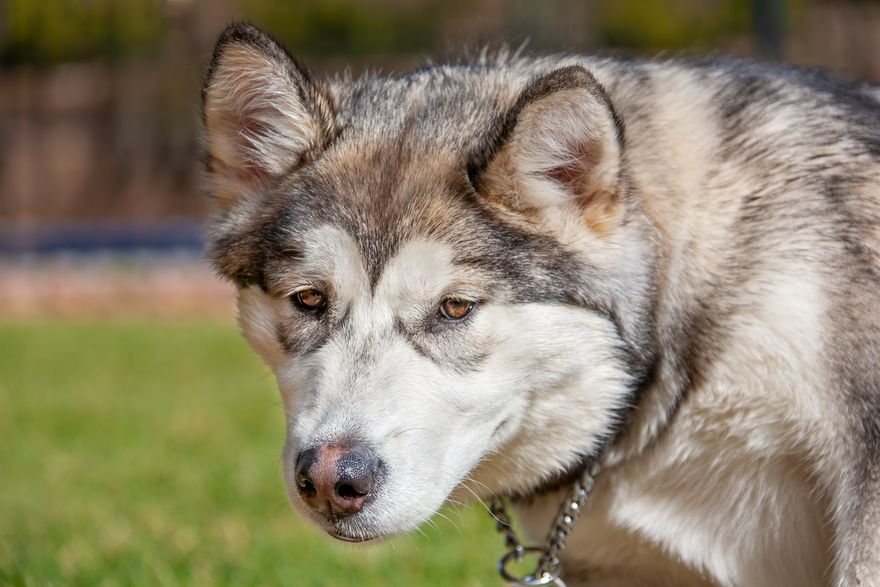
The original Arctic heavyweight: a powerful, plush-coated freight dog bred by the Inuit Mahlemut people to haul heavy sledges across the frozen North. Immensely strong, endlessly affectionate, and a genuine handful.
Temperament, honestly
4 traitsLiving with one
4 essentialsEscape-proof fencing
Champion diggers and climbers. Secure, high fencing with a dig barrier is essential — a bored Malamute will engineer its own exit.
Serious daily exercise
A powerful working dog with real stamina. Long walks, runs, hikes, carting or sledding — an under-exercised Malamute becomes destructive.
Brush the thick coat
That dense double coat needs brushing several times a week, and daily during the twice-yearly heavy ‘blows’. Expect serious fur.
Keep them cool
Built for the Arctic, Malamutes overheat easily. Provide shade, cool spaces and water; exercise only in the cool of the day.
Coat colours
5 common coatsGrey & White
The classic Malamute: wolf-grey over a white face and underside.Black & White
Deep black over crisp white. Bold and striking.Red & White
Warm cinnamon-red over white. Less common and lovely.Sable & White
Warm sable shading over white. Subtle and handsome.Pure White
The only solid colour permitted. Rare and eye-catching.Malamutes always pair a coloured coat with a white underside, legs, feet and part of the face — pure white is the only permitted solid colour. Most wear a distinctive cap or mask over the face, giving each dog its own expression. The plush, weather-proof double coat and the plumed tail curled over the back are the breed's signatures, and a Pawtrait renders every layer faithfully.
Did you know
Is an Alaskan Malamute right for you?
Six honest questions. No email required, no judgement. Mostly.
Malamute vs other large breeds
3 breeds| Alaskan Malamute | German Shepherd | Bernese Mountain Dog | |
|---|---|---|---|
| Adult weight | 75–100 lbs | 50–90 lbs | 70–115 lbs |
| Energy | Very high | High | Moderate |
| Shedding | Heavy | Heavy | Heavy |
| Guarding | Poor | Strong | Mild |
| First-time owner | Caution | Caution | Yes |
What one actually costs
First-year estimates, USDFrom reputable, health-testing breeders. Malamute rescues are also well worth exploring.
A large working breed with some known joint risks; comprehensive cover is worthwhile.
A big, athletic dog with a big appetite. Quality large-breed food is worth it.
Routine care, grooming tools, harness and gear, and a serious vacuum for shedding season.
Still unnamed?
The Malamute name dealerSee your Alaskan Malamute as a Pawtrait
6 styles
Bring it home
Starting at $19Alaskan Malamute FAQ
The questions everyone GooglesWhat is the difference between an Alaskan Malamute and a Husky?
They're often confused but quite different. The Malamute is bigger, heavier and stronger, bred to haul heavy freight slowly over long distances; the Siberian Husky is smaller, lighter and faster, bred for speed. Malamutes tend to have browner eyes (never blue in the standard), a bulkier build and a more independent streak. Both are affectionate, vocal, high-shedding northern breeds.
Are Alaskan Malamutes good family dogs?
Yes — for active families who understand the commitment. Malamutes are wonderfully affectionate, playful and generally great with children they're raised with, and they thrive as full members of the household. But they're large, powerful and demanding of exercise, with a strong prey drive toward small pets, so they suit energetic homes with older kids and secure space, not quiet or first-time settings.
Do Alaskan Malamutes shed a lot?
Enormously. The thick double coat sheds year-round and then ‘blows’ completely twice a year, shedding in great clumps over a week or two. Expect frequent brushing (daily during the blows), fur on absolutely everything, and a hard-working vacuum. This is one of the heaviest-shedding breeds there is — a genuine, non-negotiable part of Malamute life.
How much does an Alaskan Malamute cost?
Roughly $1,200–$2,800 from a reputable breeder in the US. Then budget around $1,800–$3,000 a year for food, insurance, grooming and vet care — this is a big dog, and the costs scale with the size, plus grooming and gear for an active working breed.
Can Alaskan Malamutes live in hot climates?
Only with real care. Bred for the Arctic, Malamutes carry a heavy coat and overheat dangerously in warm weather. They can live in hotter climates but need air-conditioning, constant shade and water, and exercise strictly in the cool of early morning or evening. Never shave the coat — counter-intuitively it insulates against heat as well as cold. In very hot regions, think hard before choosing this breed.
Are Alaskan Malamutes easy to train?
Not especially. They're intelligent but very independent, bred to think for themselves on the trail rather than take orders, so they need patient, consistent, engaging training from puppyhood. They bore easily with repetition and have a stubborn streak. Reliable off-lead recall is rarely achievable given their prey drive and wanderlust, so secure areas and a lead are the norm.
Keep exploring
Free tools & guidesDog Age Calculator
How old is your Alaskan Malamute in human years? The real maths, by breed size.
Free toolBreed Identifier
Upload a photo, discover the breed. Great for the mystery rescues.
City guidesPaw Places
Dog-friendly parks, cafés and hotels in London, Sydney, New York and more.
Breed libraryAll 205 breed guides
From Affenpinscher to Yorkshire Terrier — honest guides to every breed.
Upload a photo, see it instantly
No waiting, no surprises. Your Alaskan Malamute's Pawtrait renders in seconds, free to preview, before you spend a cent.
