The Akita
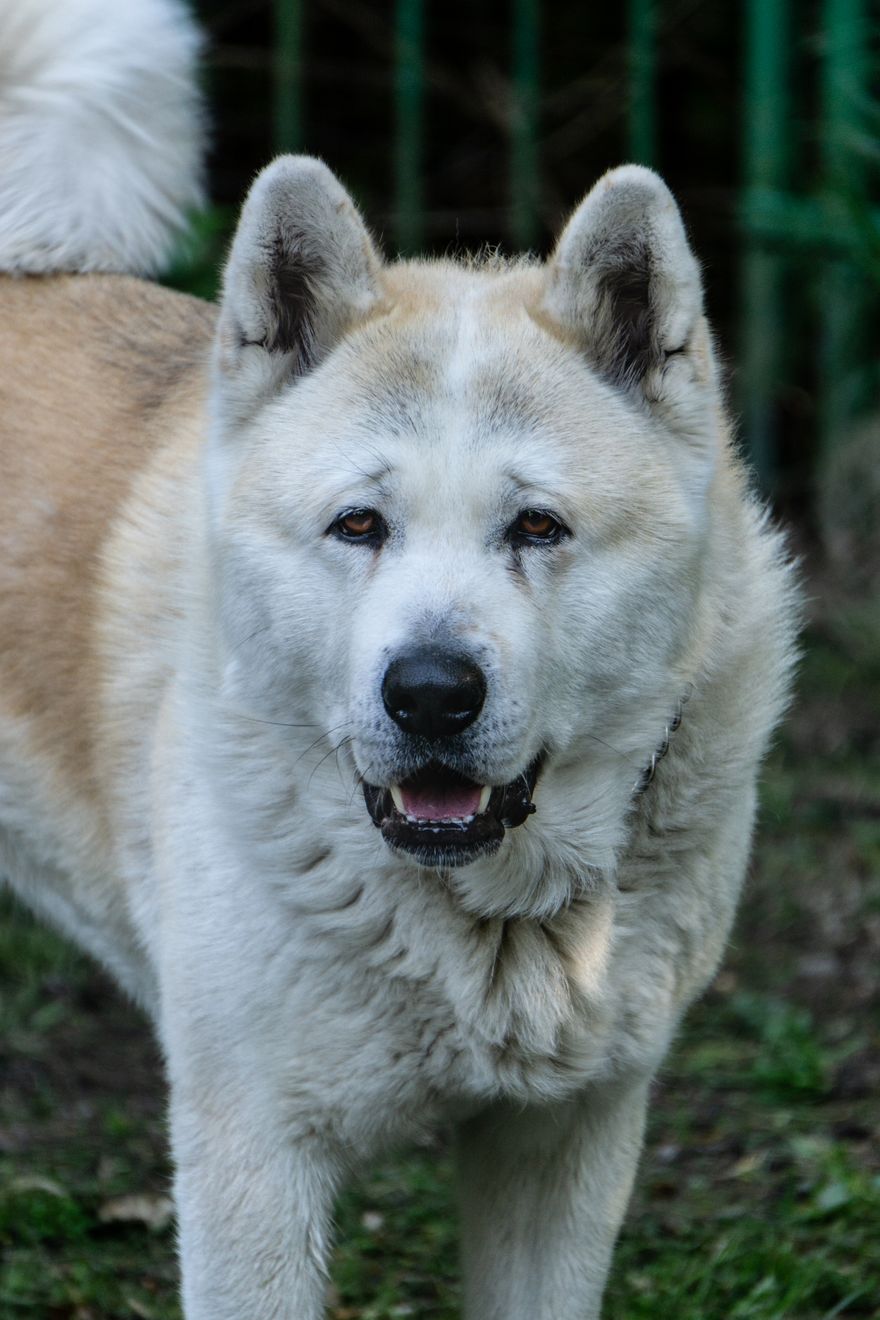
Japan's dignified guardian: a powerful, ancient spitz breed from the snowy northern mountains, revered as a symbol of loyalty, health and good fortune, and utterly, unshakeably devoted to its own family.
Temperament, honestly
4 traitsLiving with one
4 essentialsSocialise early
Naturally wary and dog-aggressive. Early, thorough, lifelong socialisation is essential to a confident, well-mannered adult.
Brush that double coat
Moderate year-round shedding, plus twice-yearly heavy blows. Brush several times a week, daily during the big sheds.
An experienced hand
Powerful, independent and protective — not a beginner's dog. Calm, confident, consistent leadership from day one.
Keep it cool
Built for Japanese winters, the Akita struggles in heat. Provide shade and cool space, and walk in the cool of the day.
Coat colours
5 common coatsRed Fawn
The iconic Akita Inu look: warm red with white urajiro.White
Pure white throughout, with no mask. Clean and striking.Brindle
Dark striping over a lighter base, with white urajiro.Sesame
Red with black-tipped hairs. Subtle and much admired.Black Overlay
Dark-tipped coats seen in the American Akita line.One detail nearly every Akita shares is ‘urajiro’ — the whitish fur on the cheeks, muzzle, chest, underside and legs. The Japanese Akita Inu comes in a tightly-defined set of colours (red, white, brindle, sesame), while the larger American Akita is permitted almost any colour, including black masks the Japanese line never has. Whatever the shade, a Pawtrait renders that plush coat and curled tail faithfully.
Did you know
Is an Akita right for you?
Six honest questions. No email required, no judgement. Mostly.
Akita vs other large breeds
3 breeds| Akita | German Shepherd | Bernese Mountain Dog | |
|---|---|---|---|
| Adult weight | 70–130 lbs | 50–90 lbs | 70–115 lbs |
| Energy | Moderate | High | Moderate |
| Shedding | Heavy | Heavy | Heavy |
| Guarding | Strong | Strong | Mild |
| First-time owner | No | Caution | Yes |
What one actually costs
First-year estimates, USDFrom reputable, health-testing breeders. Akita rescues are also well worth exploring.
A large breed with some known health risks; comprehensive cover is worthwhile.
A big dog with a big appetite. Quality large-breed food supports coat and joints.
Routine care, grooming tools for shedding season, and a good vacuum you'll come to rely on.
Still unnamed?
The Akita name dealerSee your Akita as a Pawtrait
6 styles
Bring it home
Starting at $19Akita FAQ
The questions everyone GooglesAre Akitas good family dogs?
For the right family, they're wonderfully devoted — loyal, gentle and protective with their own people. But they're a serious commitment: powerful, independent and naturally wary of strangers and other dogs. They suit experienced owners in calm homes with older, respectful children, and need early socialisation. They are not an easy first dog or a casual family pet.
Are Akitas aggressive?
Not toward their families, with whom they're deeply gentle and affectionate. But the breed is genuinely protective, wary of strangers, and often aggressive toward unfamiliar dogs — particularly of the same sex. This is instinct, not a fault, but it means an Akita needs an experienced owner, early and ongoing socialisation, and careful management around other dogs. Responsible ownership makes all the difference.
Do Akitas shed a lot?
Yes — significantly. That thick double coat sheds moderately all year and then ‘blows’ completely twice a year, shedding in dramatic clumps over a week or two. Expect frequent brushing (daily during the blows), a great deal of fur around the home, and a good vacuum. On the plus side, Akitas are otherwise remarkably clean and near-odourless.
How much does an Akita cost?
Roughly $1,000–$3,500 from a reputable breeder in the US, with well-bred Japanese Akita Inu lines often at the higher end. Then budget around $1,800–$3,000 a year for food, insurance, grooming and vet care — this is a large breed, and the costs scale with the size.
What is the difference between a Japanese and American Akita?
They're increasingly regarded as two distinct breeds. The Japanese Akita Inu is smaller, lighter and fox-like, with a tightly-defined palette of red, white, brindle and sesame. The American Akita is larger, heavier and more bear-like, and comes in almost any colour, including black masks. Both share the same core temperament: loyal, dignified, powerful and protective.
Are Akitas easy to train?
Not especially — they're intelligent but highly independent and strong-willed, more inclined to decide for themselves than to please. Training an Akita takes patience, consistency, respect and calm confidence from early puppyhood; harsh methods backfire badly with this proud breed. They're best suited to experienced owners who understand how to lead a dog that thinks for itself.
Keep exploring
Free tools & guidesDog Age Calculator
How old is your Akita in human years? The real maths, by breed size.
Free toolBreed Identifier
Upload a photo, discover the breed. Great for the mystery rescues.
City guidesPaw Places
Dog-friendly parks, cafés and hotels in London, Sydney, New York and more.
Breed libraryAll 205 breed guides
From Affenpinscher to Yorkshire Terrier — honest guides to every breed.
Upload a photo, see it instantly
No waiting, no surprises. Your Akita's Pawtrait renders in seconds, free to preview, before you spend a cent.
