The Poodle
A German water retriever the French adopted and made their own: brilliant, tireless and wrapped in a coat that keeps it out of the doghouse, in every sense. One breed, three sizes, endless devotion.
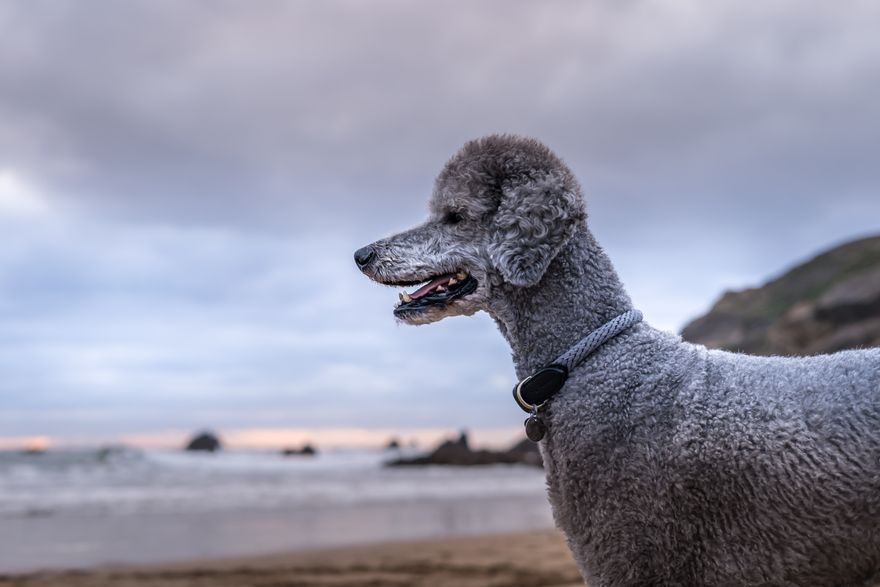
Temperament, honestly
4 traitsLiving with one
4 essentialsThe grooming commitment
That curly coat never stops growing and mats fast. Budget for a professional groom every 4–6 weeks, plus brushing at home between visits.
Exercise the brain
Physical exercise alone won't cut it. Puzzle toys, training games and new tricks keep this genius out of mischief.
Clean the ears
Hair grows inside those floppy ears and traps moisture. Regular cleaning and plucking prevents painful infections.
Exercise by size
Standards need a good hour of real activity; toys and minis less, but all three are athletes who love to move.
Coat colours
5 common coatsBlack
Dense, dramatic and the most classic Poodle colour of all.White
Crisp and clean, a show-ring staple that demands upkeep.Apricot
Warm golden peach, one of the most sought-after shades.Silver & Brown
From cafe-au-lait browns to smoky silvers that clear with age.Parti
Two-tone patches of colour on white. Increasingly popular.One thing that trips up new owners: many Poodle colours change as the dog matures — silvers are born black and clear over the first two years, and apricots can fade or deepen. The AKC standard prefers solid colours, so multicoloured "parti" and "phantom" Poodles are barred from the conformation ring despite being fully purebred. Whatever the colour, and however it settles with age, a Pawtrait renders it faithfully — curls and all.
Did you know
Is a Poodle right for you?
Six honest questions. No email required, no judgement. Mostly.
Poodle vs the other clever companions
3 breeds| Poodle (Standard) | Golden Retriever | Bichon Frise | |
|---|---|---|---|
| Adult weight | 40–70 lbs | 55–75 lbs | 12–18 lbs |
| Energy | High | High | Medium |
| Shedding | Very low | Heavy | Very low |
| Intelligence | Elite | High | Bright |
| Grooming needs | High | Moderate | High |
What one actually costs
First-year estimates, USDReputable breeders with health-tested parents. Rare colours and tiny toys run higher; rescues far lower.
Generally a healthy breed; standards need cover for hips and bloat, toys for knees and teeth.
The big one. Professional grooming every 4\u20136 weeks is essential, not optional, for this coat.
Varies hugely by size \u2014 a Standard eats far more than a Toy. Routine care, puzzle toys, home grooming kit.
Still unnamed?
The Poodle name dealerSee your Poodle as a Pawtrait
6 styles
Bring it home
Starting at $27Poodle FAQ
The questions everyone GooglesAre Poodles hypoallergenic?
No dog is truly hypoallergenic, but Poodles come about as close as it gets. Their curly coat sheds minimally and traps dander rather than releasing it, which is why they're a top choice for allergy sufferers and the go-to parent for "doodle" crossbreeds. Regular grooming is what keeps that low-allergen coat working.
Are Poodles high maintenance?
In grooming, yes — the coat needs professional attention every 4–6 weeks plus brushing at home, and skipping it leads to painful matting. In temperament, they're easy: highly trainable, eager to please and devoted. The honest summary is high-maintenance coat, low-maintenance mind.
What are the three sizes of Poodle?
Standard (over 15 inches at the shoulder), Miniature (10–15 inches) and Toy (under 10 inches). They're all one breed with the same temperament and intelligence — only the size differs. Standards are the athletic originals; toys and minis pack the same brain into a lap-sized frame.
How much does a Poodle cost?
Roughly $1,000–$3,000 from a reputable breeder in the US, with tiny toys and rare colours at the top end. The bigger ongoing cost is grooming — budget $600–$1,200 a year for that alone, on top of food and vet care. Poodles are affordable to buy but not to maintain.
Are Poodles easy to train?
Exceptionally — they're ranked the second-smartest breed and genuinely enjoy learning. The catch is that intelligence cuts both ways: they get bored fast, pick up bad habits as quickly as good ones, and will happily train you if you're not paying attention. Keep sessions varied and rewarding and they excel at almost anything.
Do Poodles bark a lot?
They can — Poodles are alert and vocal, and the smaller sizes especially will announce visitors, noises and squirrels with enthusiasm. It's very trainable, though; a well-exercised, mentally-stimulated Poodle barks far less than a bored one looking for something to do.
Keep exploring
Free tools & guidesDog Age Calculator
How old is your Poodle in human years? The real maths, by breed size.
Free toolBreed Identifier
Upload a photo, discover the breed. Great for the mystery rescues.
City guidesPaw Places
Dog-friendly parks, cafés and hotels in London, Sydney, New York and more.
Breed libraryAll 205 breed guides
From Affenpinscher to Yorkshire Terrier — honest guides to every breed.
Upload a photo, see it instantly
No waiting, no surprises. Your Poodle's Pawtrait renders in seconds, free to preview, before you spend a cent.
