The Basset
Hound
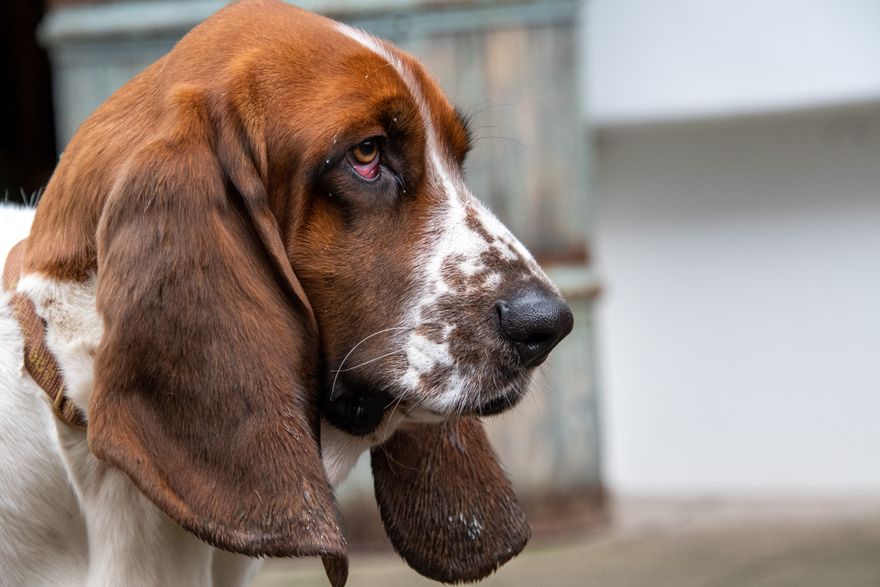
A low-slung French scent hound with the second-best nose in dogdom, endless floppy ears, and a soulful, unbothered charm. Gentle, stubborn, and permanently convinced the sofa belongs to them.
Temperament, honestly
4 traitsLiving with one
4 essentialsClean those ears
Long, low ears trap moisture and air poorly, making infections common. Check and clean them weekly, without fail.
Wipe the eyes
Those droopy lower eyelids expose the eye to irritation. Gentle wiping and vet checks keep them comfortable.
Protect the back
A long spine on short legs means disc risk. Discourage jumping on and off furniture and manage their weight carefully.
Watch the waistline
Bassets live to eat and gain weight fast, which strains their back and joints. Measured meals are non-negotiable.
Coat colours
5 common coatsTri-colour
The classic Basset — black, tan and white in bold patches.Lemon & White
Soft pale tan on white. Gentle and much-loved.Red & White
Rich chestnut and white. Warm and striking.Brown & White
Liver and white, sometimes with ticking. Understated and classic.Blue (rare)
A dilute grey. Uncommon, and can carry skin issues — buy carefully.Most Bassets are some combination of black, tan, red, lemon and white — the classic tri-colour is the icon, but any recognised hound colouring is fair game. The rare "blue" dilute looks striking but can carry skin and coat problems, so treat premium prices for it with caution. Whatever the markings, a Pawtrait renders them faithfully — every patch, freckle and floppy ear.
Did you know
Is a Basset Hound right for you?
Six honest questions. No email required, no judgement. Mostly.
What one actually costs
First-year estimates, USDReputable, health-testing breeders. Be wary of "rare" dilute colours; rescues far lower.
Cover for back problems, ear infections, eye issues and bloat is well worth having.
They'd eat all day if allowed. Measured, quality food keeps weight off that long back.
Routine care plus ear cleaner, eye wipes, a ramp for the sofa, and back-friendly bedding.
Still unnamed?
The Basset name dealerSee your Basset Hound as a Pawtrait
6 styles
Bring it home
Starting at $19Basset Hound FAQ
The questions everyone GooglesDo Basset Hounds shed a lot?
More than you'd expect. That short, dense coat sheds steadily year-round, so regular brushing and a good vacuum are part of Basset life. Their skin also produces a natural "houndy" odour, so occasional baths help. Low-maintenance coat, but not a low-shedding one.
Are Basset Hounds hard to train?
They're not stupid — far from it — but they are famously stubborn and independent, bred to follow their nose rather than your commands. Training works with patience, short sessions and a lot of food motivation, but expect a hound that weighs up every request. Recall is especially tricky: once a Basset catches a scent, it may simply stop listening. A secure garden is essential.
Are Basset Hounds good with kids?
Wonderfully so. Bassets are gentle, patient, sturdy and famously tolerant, which makes them one of the best family hounds around. As pack dogs they love company and generally get on well with other pets too. Supervise young children as always, but a Basset's easy-going nature does most of the work.
How much does a Basset Hound cost?
Roughly $800–$2,000 from a reputable, health-testing breeder in the US. Then budget around $1,300–$2,500 a year for food, insurance and vet care — factor in their tendency towards ear, eye and back problems, which can add up over a lifetime.
Can Basset Hounds be left alone?
Not happily, and not for long. As pack-bred hounds they crave company and are prone to separation anxiety, boredom and mournful baying when left too long. They do best in homes where someone is around for much of the day, or with another dog for company.
Do Basset Hounds bark a lot?
They're not constant barkers, but they are hounds — and they have a deep, loud, unmistakable bay they'll use for visitors, excitement, loneliness or simply because they feel like it. It carries a long way, which is worth thinking about if you have close neighbours. Trainable, but the voice is very much part of the breed.
Keep exploring
Free tools & guidesDog Age Calculator
How old is your Basset Hound in human years? The real maths, by breed size.
Free toolBreed Identifier
Upload a photo, discover the breed. Great for the mystery rescues.
City guidesPaw Places
Dog-friendly parks, cafés and hotels in London, Sydney, New York and more.
Breed libraryAll 205 breed guides
From Affenpinscher to Yorkshire Terrier — honest guides to every breed.
Upload a photo, see it instantly
No waiting, no surprises. Your Basset Hound's Pawtrait renders in seconds, free to preview, before you spend a cent.
