The Australian
Shepherd
Despite the name, an all-American ranch dog bred to work stock all day: brilliant, tireless and beautiful, with a brain that demands a job and a body that never quits. Not a breed for the faint-hearted.
Temperament, honestly
4 traitsLiving with one
4 essentialsExercise the mind, daily
Physical exercise isn't enough for this breed. Training, puzzle toys and dog sports keep an Aussie's working brain satisfied and out of trouble.
Brush the double coat
That weather-resistant double coat needs brushing a few times a week, and daily during the twice-yearly heavy shed.
Know the merle risk
Breeding two merles can produce "double merle" pups with deafness and blindness. Always check a breeder's health testing.
Give them a real outlet
Herding, agility, flyball, long trail runs — an Aussie with a job is calm and happy. One without becomes anxious and destructive.
Coat colours
5 common coatsBlue Merle
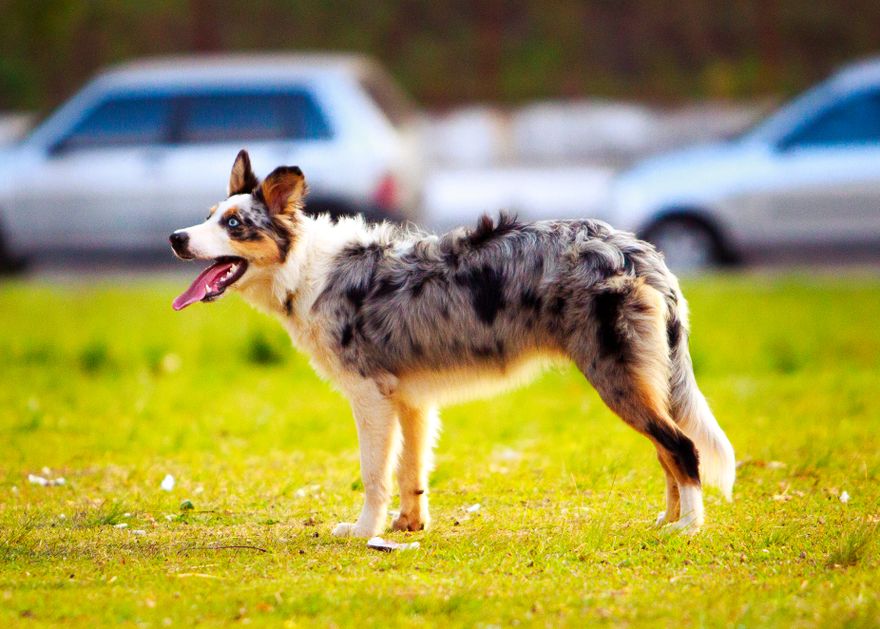
The iconic Aussie coat — marbled grey, black and white, often with tan.Red Merle
Marbled cinnamon and liver on cream. Striking and much sought-after.Black Tri
Solid black with white and copper points. Bold and classic.Red Tri
Liver red with white and copper trim. Warm and rich.Striking eyes
Aussies often have blue, amber or even two different-coloured eyes.An honest note on merle: the marbled coat is beautiful, but breeding two merle parents can produce "double merle" puppies with serious deafness and blindness. A responsible breeder never doubles up on merle — if a litter is advertised as all-merle, walk away. Whatever the coat and eye colour, a Pawtrait renders it faithfully — every marble and fleck of it.
Did you know
Is an Australian Shepherd right for you?
Six honest questions. No email required, no judgement. Mostly.
Aussie vs the other clever herders
3 breeds| Australian Shepherd | Border Collie | German Shepherd | |
|---|---|---|---|
| Adult weight | 40–65 lbs | 30–55 lbs | 50–90 lbs |
| Energy | Very high | Very high | High |
| Shedding | Heavy | Heavy | Heavy |
| Trainability | Elite | Elite | Elite |
| Apartment fit | Challenging | Challenging | Challenging |
What one actually costs
First-year estimates, USDReputable, health-testing breeders. Merle coats and show lines run higher; rescues far lower.
Generally a healthy, hardy breed. Cover for hips, eyes and the MDR1 drug sensitivity is worth it.
An active, medium dog with a real appetite. Quality food fuels all that energy.
Grooming, training classes, dog sports and a serious supply of toys to keep that brain busy.
Still unnamed?
The Aussie name dealerSee your Australian Shepherd as a Pawtrait
6 styles
Bring it home
Starting at $19Australian Shepherd FAQ
The questions everyone GooglesDo Australian Shepherds shed a lot?
Yes. Aussies have a weather-resistant double coat that sheds year-round and "blows" heavily twice a year in spring and autumn. Expect regular brushing (a few times a week, daily during the big sheds) and a good vacuum. It's the trade-off for that gorgeous coat — there's no low-shedding version of this breed.
Are Australian Shepherds good for first-time owners?
Honestly, often not. Aussies are brilliant but demanding — high energy, high intelligence, and a strong need for a job. A first-time owner who is very active and willing to commit to training and exercise can absolutely succeed, but an Aussie is a poor match for someone wanting a low-effort, easygoing pet. Know what you're taking on.
Are Australian Shepherds good with kids?
Generally very good — they're loyal, playful and love being part of a busy family. The one thing to manage is the herding instinct: Aussies may try to herd running children by nipping at heels. It's not aggression, but it needs training out early. Supervise young kids and teach the dog that people aren't livestock, and they make devoted family dogs.
How much does an Australian Shepherd cost?
Roughly $800–$2,500 from a reputable, health-testing breeder in the US, with merle coats and show lines at the top end. Budget around $1,300–$2,500 a year for food, insurance, grooming and — importantly for this breed — training or dog sports to keep them stimulated.
Can Australian Shepherds be left alone?
Not well, and not for long. Aussies are intensely bonded and need mental engagement, so long stretches alone lead to boredom, anxiety and destructive behaviour. They do best in homes where someone is around for much of the day, or where they have a job, a routine and plenty of stimulation to fill the hours.
Do Australian Shepherds bark a lot?
They can be vocal — as alert herding dogs, they'll bark to announce visitors, movement and anything that seems worth reporting. It's very trainable, and a well-exercised, mentally-satisfied Aussie barks far less than a bored one. Boredom barking is the real issue to head off with exercise and training.
Keep exploring
Free tools & guidesDog Age Calculator
How old is your Australian Shepherd in human years? The real maths, by breed size.
Free toolBreed Identifier
Upload a photo, discover the breed. Great for the mystery rescues.
City guidesPaw Places
Dog-friendly parks, cafés and hotels in London, Sydney, New York and more.
Breed libraryAll 205 breed guides
From Affenpinscher to Yorkshire Terrier — honest guides to every breed.
Upload a photo, see it instantly
No waiting, no surprises. Your Australian Shepherd's Pawtrait renders in seconds, free to preview, before you spend a cent.
